Sorry, no results.
Please try another keyword
 Oud + synthesizer
 The "Two Rivers" are the rivers in the region where oud has its origin. Please enjoy this 20 mintes taqsim on maqam bayati (and variations).
 I received comments that some of my recordings have too much expression and it takes their mind away from their work or study. So it's not always suitable as BGM… Therefore I created this track - it's made with full atmosphere, but less emotional expression so that you can use it as ambient support for[...]
 I play here on Arabic maqams and NOT on Western tempered scale. E.g. the 2nd degree of the scale is slightly higher than the Western scale. It might sound strangely some ears, but it’s not an error...
 Oud Improvisation on Various Maqams (Arabic melodic modes)
 Oud Ambient on Maqam Kurd with synthesizer (Maqam: Arabic melodic modes)
 Meditative music on various maqamat with electric oud. Please enjoy the clean sound of the electric oud!
 A fellow musician in my region listened to this track and told me, "Oud and frame drum don't match (in timing in this recording). You need some rhythm training!"... Please don't laugh about that. I'm sure there are many people who believe a percussion needs a fixed beat. We have in Japan various musical styles[...]
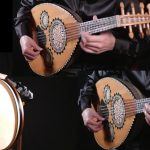 "Dogyo Ninin" (We go in twos) - In Shingon Buddhism, we often say this phrase. In our life, we are never alone and have any companion. The "someone" can be your friends, your life partner, the god in your religion or Kukai (in Shingon Buddhism). It could also be all the people in the society[...]
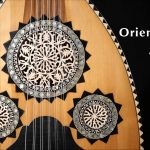 Ambient music with Arabic oud + synthesizer
 Original version with oud + synthesizer
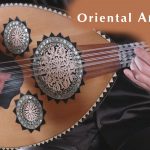 Ambient oud music on maqam bayati
 Pure intonation version of "Red Sand & Wind"
 "Evening Star" pure intonation version
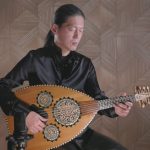 This is a harmonious cohabitation in music - musically at least it's possible... In this piece I use elements from different cultures... The same motif is played according to different musical systems. Arabic maqamat, Turkish maqam, Japanese scale, European church mode etc... Ornaments are Arabic, Japanese or European etc. Of course I put my personal[...]
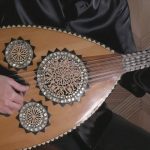 Meditative Ambient on Oud
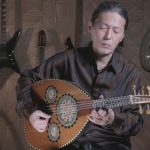 This music was also featured in the documentary “The Last People of Petra.” The film won the Gold Student Academy Award, which is an Oscar for emerging filmmakers.
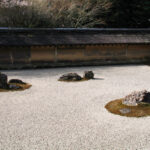 Meditative Music on Oud
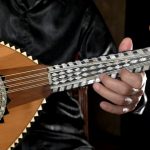 Pure intonation sleep music on oud and synthesizer
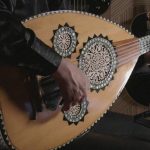 Journey to the Ancient World
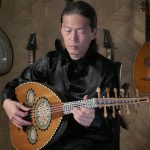 The oldest surviving lute instruments are from the 8th century and were preserved in Nara, Japan. These instruments were brought to Japan from Persia and India via the Silk Road. On the instruments we see images of camels or traders on horseback, which did not exist in Japan at that time, as inlays. In this[...]
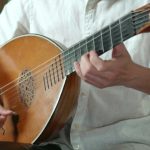 Phrygia was the ancient name for a region in what is now Turkey. It was a time of numerous myths and epics that have been passed down to this day. In music, we see the name today as the Phrygian church mode. I wrote a piece of music in this mode and play the lute[...]
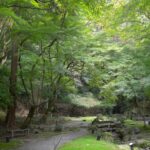 As a Japanese artist, I have attempted to express the ethereal tranquility of Japan using the Arabic instrument oud on Maqam Kurd.
 Here, I play the oud with my fingers instead of the typical plectrum, Risha. It gives me more tonal variety and expressive possibilities.iming and the right sound. It took me several decades to achieve this.
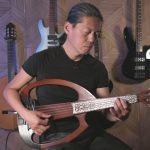 Microtones are notes between standard semitones, most commonly referring to quarter tones. Pay attention to the microtones between E and E♭ in this piece. You’ll likely pick them up easily because they sound unusual to our Western ears right away. I play this microtone slightly lower than an exact quarter tone when letting the D[...]
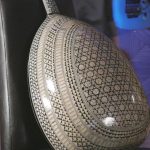 In this piece, I use microtones - intervals smaller than a semitone. The quarter-tones in the maqam (makam)—an Arabic, Turkish, or Persian tonal system—are not exact quarter-tones. Depending on the character of the maqam, the intervals are sometimes slightly larger or smaller than a quarter-tone. The semitone interval can also be slightly larger. The exact[...]
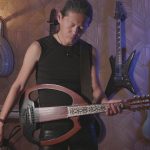 The oud is an instrument with a 5,000-year history. This is the most modern form it has taken. It has a flat but quite wide body. When I play sitting down, I have to hold my hands quite high, and it’s tiring... Here, I play standing up and hold my hands much lower. That way,[...]